PSU showcases “HatYai Model Plus” as a science-driven flood management model
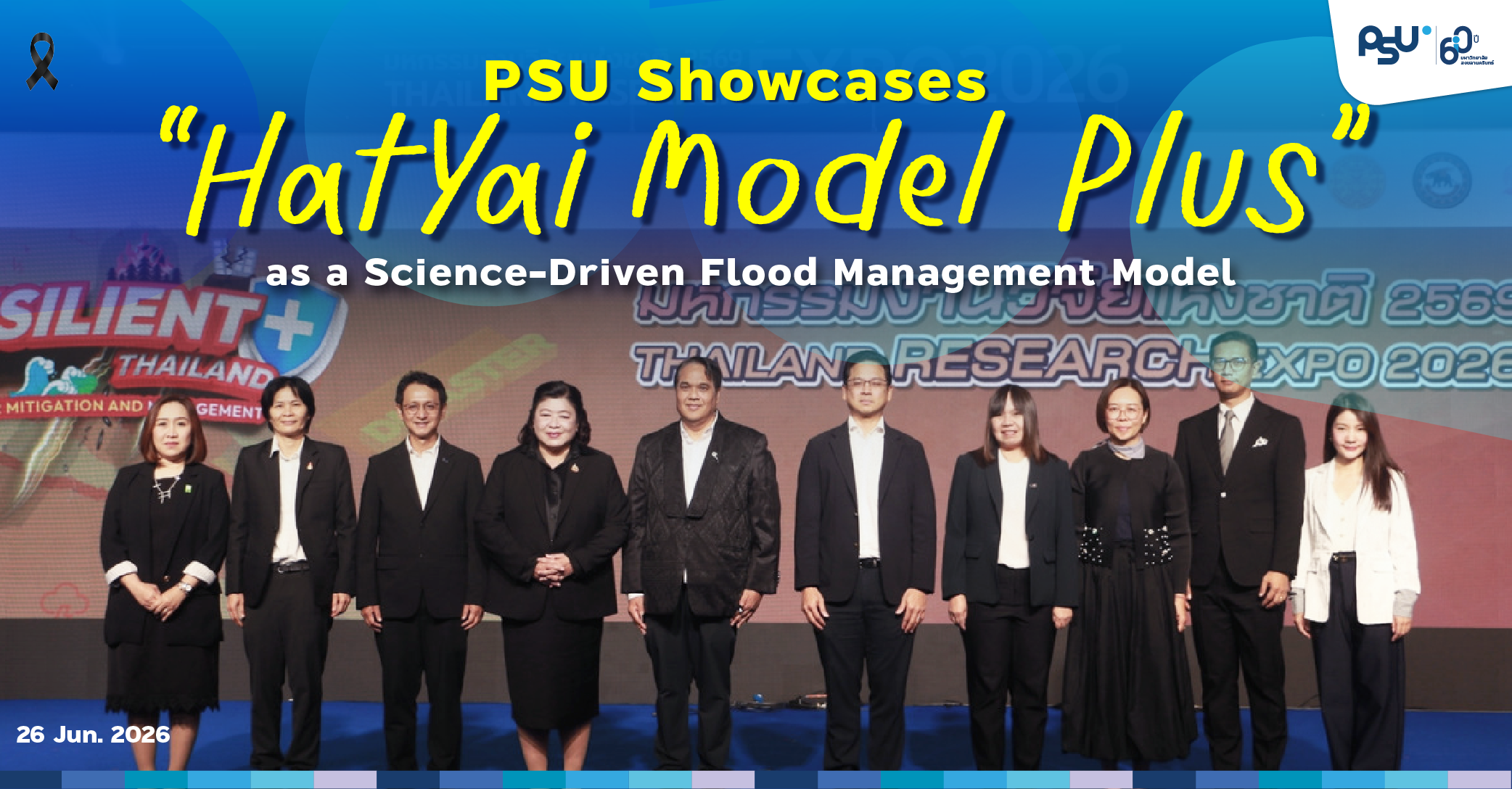
Prince of Songkla University (PSU) shared its experience in responding to one of Songkhla's most severe flood events at Thailand Research Expo 2026, highlighting how science, technology, and innovation can strengthen disaster preparedness and community resilience. The presentation formed part of a special session on "Thailand's Role in Scientific and Technological Leadership in Times of Crisis," delivered by Dr. Punpermsak Aruni, Deputy Permanent Secretary of the Ministry of Higher Education, Science, Research and Innovation (MHESI). The event was held on 26 June 2026 at the Centara Grand at CentralWorld in Bangkok.

PSU also participated in an academic panel discussion titled "How Can Science and Technology Help Thailand Overcome National Crises?" Assoc. Prof. Dr. Tanit Chalermyanont, Vice President for Planning and Finance, shared lessons learned from the major Hat Yai flood in November 2025 and introduced "HatYai Model Plus," an integrated disaster management framework that combines science, technology, innovation, and community participation to strengthen urban resilience and support the development of a sustainable resilient city.

Dr. Tanit explained that the widespread flooding affected the economy, public health, infrastructure, and the daily lives of local residents. The experience demonstrated that future disaster management requires more than emergency response. It calls for data-driven decision-making, advanced technologies, and strong collaboration among government agencies, the private sector, communities, and academic institutions. In response, PSU worked with its partners to develop HatYai Model Plus, a comprehensive resilience ecosystem covering disaster prevention, preparedness, emergency response, and recovery.
The model is built on three key pillars:
1. AI Forecast & One Data – an AI-powered flood forecasting system integrated with a centralized data platform that enables real-time information sharing and decision-making.
2. Community Resilience – strengthening local communities and volunteer networks to improve preparedness and emergency response.
3. Smart Shelter & Super Volunteers – developing smart evacuation shelters supported by digital systems for managing personnel, relief supplies, medical resources, and assistance for affected communities.
HatYai Model Plus also includes several research initiatives, such as AI-based early flood warning systems, the HatYai-ROD and One Data Platform, an API ecosystem for inter-agency data exchange, and an Emergency Operations Center (EOC) that integrates information, alerts, and disaster response into a unified command system.
Dr. Tanit emphasized that research should ultimately serve society. He noted that meaningful research extends beyond academic publication by engaging directly with communities, understanding real-world challenges, and building partnerships across sectors to develop practical solutions. He concluded by encouraging researchers to collaborate widely and remain connected with society.
"Research should not be done in isolation. Strong networks help us understand real challenges, and together, we can always find solutions."PSU's participation at Thailand Research Expo 2026 reflects the University's commitment to applying research and innovation to address societal challenges and support more resilient communities across Thailand.